
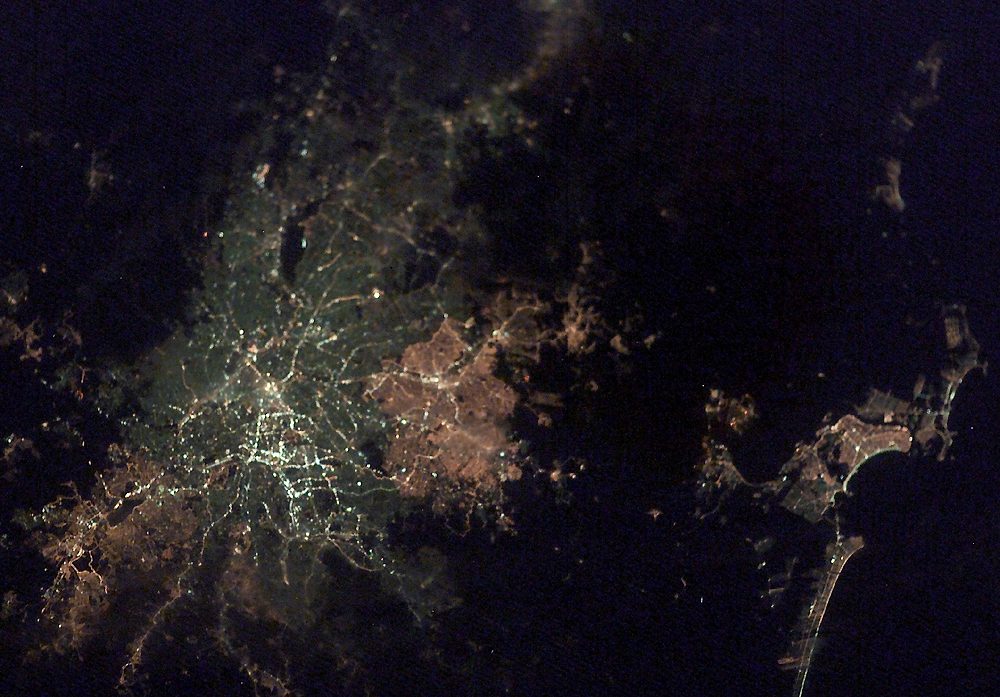
The scenario that opens this article is illustrative. It describes a typical day rather than a specific event.
At 09:47 an explosion is reported at an industrial logistics park outside São Paulo. A Lloyd's underwriter who writes political violence business in Latin America starts hearing about it from every direction: an alert from a monitoring service, a news notification, an email from a broker, local reporting and a stream of posts on social media. By 10:15 she has more than a dozen separate pieces of information about one event.
None of them answers her first questions. Which of our insureds have sites near the park? Is this a single incident, or part of something wider in the region? What did the picture there look like before this morning? Should she call the brokers now, or wait until the facts settle?
By late afternoon she has the answers. Four policyholders have sites in the area. The incident history around each one has been pulled together, the overlaps checked and a note written for the brokers. The work is careful and defensible. Most of the day, though, went on finding, collating and checking material. Only a small part of it went on the judgement her experience is for. Tomorrow there will be another event somewhere else, and the cycle will start again.
That is the intelligence paradox. The market has more access to intelligence than it has ever had, and less time to turn it into decisions.
Access to intelligence has grown faster than the time to use it
Twenty years ago an underwriter assessing political risk relied on periodic country reports, a call to a specialist and a limited incident database. Today the same underwriter can draw on continuous incident monitoring, detailed country assessments, satellite imagery, government advisories and searchable archives going back years.
The working day has not grown to match. Analytical teams have not grown in proportion to the sources they are expected to follow, while portfolios have become more complex and expectations for documented decisions have risen.
The usual response is to add another source. Each new service brings its own format, its own alerts and its own version of events to reconcile with the rest. More material arrives, and the same people have to process it.
The gap sits between the information and the decision
Between "something has happened" and "this is what we are doing about it" lies a body of work that rarely appears in any job description. We call it the translation layer. In the scenario above it included:
- identifying which insured locations sit near the event
- pulling together what has happened around those locations before
- judging whether the event fits a wider pattern
- comparing the current picture with what was known when the policies were written
- writing it up, with the evidence, for colleagues and brokers
None of this is optional, and none of it can be done carelessly. Most of it, though, is research and collation rather than judgement. Experienced underwriters and analysts end up doing it because there is no system underneath them that has already done it.
More people and more sources only go so far
Hiring more analysts adds real capacity, and good analysts are worth having. The skills are scarce, however, and capacity grows only as fast as headcount. When an event touches dozens of locations at once, the queue forms anyway.
Specialist advisory services add depth and expertise that most insurers cannot hold in-house. Where their own analysts still assemble each picture by hand, they meet the same limit at the same moments as their clients.
General-purpose AI tools can summarise text quickly. Without an evidenced foundation underneath, they produce fluent answers whose sources and dates cannot be checked, which risks speeding up the circulation of unverified material rather than reducing the work.
The problem is one of infrastructure
The specialty market does not lack information. What it lacks is a foundation in which the information has already been collected, structured and connected before the question is asked: events linked to the places they affect, set against their history and wider context, with sources and dates kept visible.
With that foundation in place, the underwriter in São Paulo does not start from a pile of alerts. She starts from an evidenced picture of the locations that matter and spends her time on what it means. That is what CORTEX is built to provide. An intelligence baseline that could take a team days or weeks to assemble by hand can be produced in minutes, and the judgement stays with the underwriter.
The rest of this series looks at why specialty insurance feels this pressure first, how risk intelligence has developed, what intelligence infrastructure actually is, whether insurers should build it themselves, and what changes when brokers and underwriters work from the same evidence.
First published in an earlier form in early 2026.